
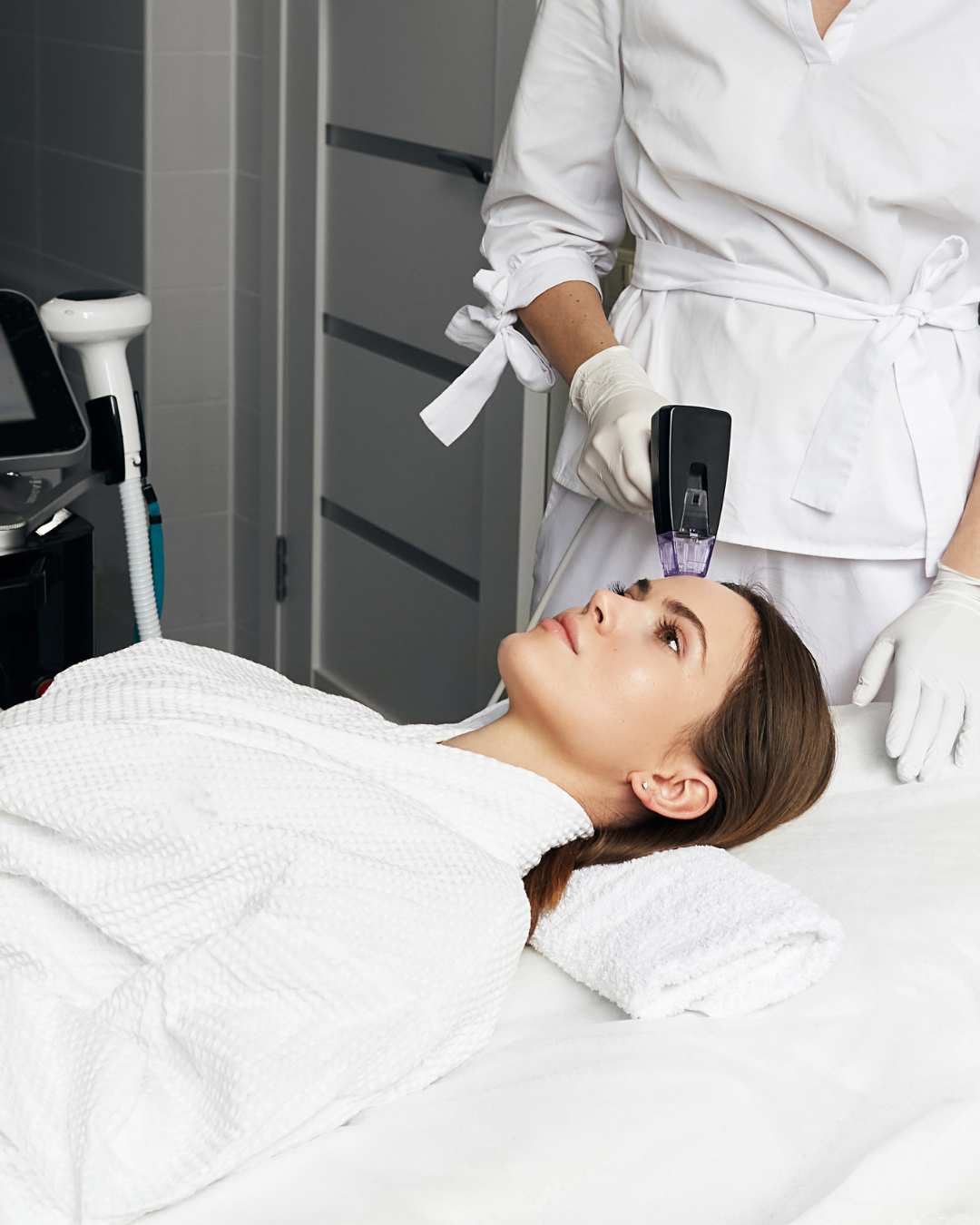
Esthetician Career Advice: A Real-World Guide to Building a Successful Career in Esthetics
What I Wish Every New Esthetician Knew Before Building a Career in This Industry
Becoming an esthetician can open the door to an incredible career.
But getting your esthetics license and building a successful esthetics career are two very different things.
School teaches you the foundation. Your license allows you to enter the profession.
What happens next depends heavily on what you do with it.
I'm Erica Roybal, an esthetics educator, entrepreneur, and founder of Colorado Aesthetics Academy and Denver Dream Medspa. I've experienced this industry from several sides—as a provider, permanent makeup artist, educator, employer, and business owner.
I've interviewed estheticians.
I've hired them.
I've trained them.
I've watched students graduate and build careers.
I've watched talented providers struggle.
And I've watched other estheticians turn the same license into opportunities they probably never imagined when they first enrolled in school.
There are patterns.
This guide is my attempt to put as many of those lessons as possible in one place.
Whether you're considering esthetics school, preparing to graduate, looking for your first esthetician job, struggling to build clientele, or wondering how to take your career to the next level, start here.
First: Is Esthetics Actually a Good Career?
It absolutely can be.
But I don't think anyone should choose esthetics because social media made the profession look easy.
A successful esthetics career involves much more than performing beautiful treatments in a beautiful treatment room.
You are working with people.
That means consultations, expectations, personalities, schedules, cancellations, complaints, rebooking, sales, sanitation, documentation, continuing education, and sometimes difficult conversations.
Depending on the career you choose, you may also work evenings and weekends or spend significant portions of your day on your feet.
And especially in the beginning, your schedule may not be full.
That's the reality.
But here's the other side.
Esthetics can also offer tremendous flexibility and room for growth.
Your career could eventually include:
Spa esthetics
Corrective skincare
Medical aesthetics
Med spa employment
Advanced aesthetic treatments
Cosmetic laser
Permanent makeup
Sales or brand education
Management
Esthetics instruction
Solo practice
Spa ownership
Med spa ownership
Content creation
Consulting
Education and training
Your first esthetician job does not have to be your final destination.
That's one of the things I love most about this industry.
What Does an Esthetician Actually Do?
At its core, an esthetician is a licensed professional trained in skincare and aesthetic services within the scope permitted by their state.
Depending on your state, training, workplace, and scope of practice, your career may involve services such as:
Facials
Skin analysis
Exfoliation
Hair removal
Makeup
Product recommendations
Acne-focused skincare
Anti-aging skincare
Advanced aesthetic technologies
Other approved services
But here's something I wish students understood earlier:
Performing the treatment is only part of your job.
Successful estheticians also become very good at:
Listening.
Educating.
Building trust.
Communicating.
Managing time.
Recommending appropriate services and products.
Creating an experience people want to return to.
Your technical skill gets someone onto your treatment table.
The entire experience determines whether they come back.
Step 1: Choose Your Esthetics School Carefully
Your career begins before you ever receive your license.
Don't choose an esthetics school based only on which program is closest or cheapest.
Ask better questions.
Questions I would ask an esthetics school:
How much hands-on training will I actually receive?
What treatments will I practice?
Who are the instructors?
Are the instructors actively connected to the industry?
What equipment will I learn on?
How many students share equipment?
Will I work with real clients?
What does career preparation look like?
Will I graduate with portfolio material?
Does the school help prepare students for interviews?
What are graduates actually doing after school?
What is included in tuition?
What additional expenses should I expect?
And one of my favorites:
"Can I tour the school while students are actually in class?"
Marketing materials tell you what a school wants you to see.
Watching the environment tells you much more.
Step 2: Understand That Your License Is the Beginning
One of the biggest mindset shifts I try to teach students is this:
Graduation doesn't mean you're done learning.
It means you're finally allowed to begin learning professionally.
There will be treatments you aren't confident performing yet.
That's normal.
There will be skin conditions you haven't seen before.
There will be client conversations that make you nervous.
There will be moments when you need to ask someone more experienced for guidance.
None of that means you received a bad education or aren't talented.
Experience requires experience.
You cannot manufacture your 500th client on your fifth client.
Give yourself permission to be new while still holding yourself to high professional standards.
Step 3: Become Exceptional at the Fundamentals
New estheticians sometimes become so focused on advanced treatments that they rush past the fundamentals.
Don't.
Before worrying about becoming the most advanced provider in your city, become excellent at:
Consultations
Skin analysis
Sanitation
Treatment preparation
Client comfort
Contraindications
Aftercare
Documentation
Time management
Professional communication
You should also understand why you're performing each step of a treatment.
Don't just memorize protocols.
Ask:
Why am I using this product?
What am I trying to accomplish?
What would make me change this treatment?
When should I not perform it?
What should I do if the skin responds differently than expected?
That's how you start moving from someone who can follow a protocol to someone who can think like a professional.
Step 4: Get Your First Esthetician Job Strategically
Your first job does not need to be your dream job.
It needs to help you become better.
When evaluating your first opportunity, I would look beyond the hourly rate.
Ask:
Will I get enough hands-on experience?
A slightly lower-paying position with strong mentorship, training, and client volume can sometimes be more valuable early in your career than a higher-paying position where you rarely perform services.
Who will train me?
Working around excellent providers accelerates your development.
What services can I learn?
Exposure matters.
Is there room to grow?
Look at the people already working there.
Have they advanced?
What is the culture like?
A beautiful Instagram account does not guarantee a healthy workplace.
How are providers paid?
Understand hourly pay, service commission, retail commission, tips, bonuses, and any performance expectations before accepting the position.
Think beyond:
"How much will I make next month?"
Ask:
"Who could I become after working here for two years?"
Step 5: Learn How to Interview Like a Professional
I've sat on the employer side of esthetician interviews.
One mistake I see is candidates trying so hard to demonstrate technical knowledge that they forget what the employer is actually evaluating.
Of course I care whether you can perform treatments safely.
But I'm also asking myself:
Would I trust this person with one of my clients?
I notice things like:
Did you arrive on time?
Are you prepared?
Do you communicate professionally?
Can you explain a treatment clearly?
Do you listen?
Are you coachable?
Can you accept feedback without becoming defensive?
Do you admit when you don't know something?
Do you seem genuinely interested in clients?
Do you take sanitation seriously?
Would you represent the brand well?
And here's an important one:
Confidence is not pretending you know everything.
One of the fastest ways to concern an experienced employer is to confidently give an incorrect answer rather than saying:
"I'm not sure, but here's how I would find out."
I can train someone who wants to learn.
It is much harder to train someone who believes they already know everything
Step 6: Build a Portfolio Before You Think You Need One
Your portfolio is evidence.
Don't wait until you're applying for your dream position to start building it.
Document your work consistently.
Depending on your services, include:
Before-and-after photographs
Skin transformations
Brow work
Lash work
Makeup
Treatment progression
Client testimonials where appropriate
Learn to take excellent photographs.
Use:
Consistent lighting
Consistent angles
Clean backgrounds
Similar camera distance
Minimal editing
No filters that alter treatment results
A portfolio should demonstrate your work, not your ability to edit a photograph.
Step 7: Learn How to Build Clientele
This may be one of the most important career skills nobody talks about enough.
You can be an incredible esthetician and still have an empty schedule.
Clientele doesn't magically appear because you're talented.
You build it.
One client at a time.
Your first goal isn't getting thousands of Instagram followers.
It's getting the person who saw you Tuesday to come back.
Focus on five things:
1. Consultation
Understand what the client actually wants before trying to sell them something.
2. Results
Perform appropriate treatments consistently.
3. Experience
Make people feel comfortable, respected, heard, and cared for.
4. Rebooking
Give the client a reason and timeframe to return.
Don't end with:
"Come back whenever."
Explain what you recommend next and why.
5. Follow-up
A thoughtful message after an advanced service can differentiate you tremendously.
Step 8: Stop Being Afraid of Sales
A lot of estheticians tell me:
"I don't like selling."
I understand why.
Nobody wants to feel pushy.
But ethical sales and pressure are not the same thing.
If someone tells you:
"My biggest concern is my dry skin."
and you know their home routine is contributing to it, recommending an appropriate moisturizer isn't being pushy.
It's doing your job.
The key is whether your recommendation exists for the client's benefit or your commission.
Educate first.
Recommend second.
Allow the client to decide.
That's ethical selling.
And learning how to communicate value can significantly affect your career.
Step 9: Become the Esthetician Clients Ask for by Name
This is where careers begin to change.
You don't want to remain interchangeable forever.
You want someone to call and say:
"I want an appointment with her."
That happens through consistency.
Be the person who remembers what bothered the client last time.
Be the person who follows up.
Be the person who explains what's happening.
Be the person who doesn't recommend a treatment when the client doesn't need it.
Be the person who keeps learning.
Be the person whose results are consistently good.
Reputation compounds.
One happy client tells another.
That client tells another.
Eventually, you aren't constantly chasing clients.
Clients begin looking for you.
And learning how to communicate value can significantly affect your career.
Step 10: Develop a Specialty
You don't need to specialize immediately.
In fact, early in your career, broad exposure can be incredibly valuable.
But over time, specialization can differentiate you.
You might become known for:
Acne
Mature skin
Corrective skincare
Brows
Permanent makeup
Laser hair removal
Cosmetic laser
Advanced skin treatments
A particular technology or treatment category
The important question isn't:
"What's trendy?"
Ask:
"What can I become exceptionally good at that people are willing to seek me out for?"
Those are very different questions.
Step 11: Invest in Advanced Education Strategically
One of the easiest ways to waste money early in an esthetics career is collecting certifications without a career strategy.
A certificate is not automatically an income-producing skill.
Before paying for advanced training, ask:
Is this service within my scope of practice?
Rules vary significantly by state.
Is there demand for it?
Will my current or prospective employer allow me to perform it?
Will I actually have access to the equipment?
How much additional practice will I need?
What is the realistic earning opportunity?
Who is teaching me?
Will I receive meaningful hands-on training?
Does the training focus on safety—or primarily on selling the treatment?
Education is one of the best investments you can make.
Random education isn't.
Build your training around the career you're trying to create.
Step 12: Understand Your Numbers
Even if you never own a business, understanding basic business economics will make you a more valuable professional.
Learn terms like:
Revenue
Service revenue
Retail revenue
Average ticket
Rebooking rate
Client retention
Utilization
Commission
Cost of goods
Profit
For example:
Imagine Esthetician A performs $8,000 in services each month.
Esthetician B performs $15,000.
If both work similar schedules, the business will naturally want to understand what Esthetician B is doing differently.
Maybe she retains more clients.
Maybe she rebooks.
Maybe she sells appropriate home care.
Maybe her average treatment value is higher.
Maybe clients specifically request her.
This is why understanding the business side of your profession matters.
Step 13: Understand How Estheticians Get Paid
Esthetician compensation can vary significantly.
You may encounter:
Hourly pay
You earn a fixed hourly rate.
Service commission
You receive a percentage or calculated amount based on services performed.
Retail commission
You receive compensation for qualifying product sales.
Tips
Client gratuities may represent part of take-home income depending on the environment.
Performance bonuses
Some businesses reward revenue, retention, sales, or other metrics.
Self-employment
You generate revenue directly but also assume business expenses and risk.
Never compare two jobs based solely on one number.
A compensation package needs to be evaluated as a whole.
How Much Do Estheticians Make?
There is no single honest answer.
Income varies based on:
Location
Experience
Hours
Employment model
Client volume
Specialization
Pricing
Commission
Tips
Retail sales
Advanced training
Personal clientele
Whether you're employed or self-employed
National wage statistics are useful as a baseline, but they don't tell the entire story—particularly for self-employed professionals.
Your earning potential can change dramatically as your skill, clientele, specialization, and business knowledge grow.
Can an esthetician make $100,000 a year?
Yes, some can.
But I would never tell a student that a six-figure income is guaranteed.
It isn't.
I've written an entire guide about the variables that can help move an esthetician toward that level.
[READ: HOW TO BECOME A 6-FIGURE ESTHETICIAN →]
Step 14: Build Your Personal Brand Before You Need It
Your personal brand isn't your logo.
It's what people associate with your name.
What are you known for?
What does your work look like?
How do you communicate?
What do clients say about you?
What appears when someone searches your name?
You don't need 100,000 followers.
You need credibility.
Start documenting your professional journey.
Educate.
Show your work.
Explain your philosophy.
Talk about what you're learning.
Be consistent.
And remember:
Your employer's audience is not automatically your audience.
Build professional relationships and a reputation that can follow you throughout your career—while always respecting your employment agreements, client relationships, and professional boundaries.
Step 15: Don't Confuse Followers With Clients
This deserves its own section.
An esthetician with 1,500 local followers who trust her may have a much stronger business than someone with 100,000 followers scattered across the country.
If you're building a local clientele, create content for the person who could actually sit on your treatment table.
Instead of:
"Come get a facial!"
Try educating:
Why does my skin feel dry in winter?
How often should I get a facial?
What treatment helps acne marks?
What's the difference between these two services?
What should I stop doing before my appointment?
Useful content builds authority.
Authority builds trust.
Trust makes booking easier.
Step 16: Learn Client Retention Before Chasing New Clients
This is one of the most important business lessons I can give an esthetician.
Getting a new client is exciting.
Keeping one is powerful.
If ten new people book with you this month but none return, you have to find ten more next month.
And ten more after that.
That's exhausting.
Instead, think:
How can I become someone's esthetician for the next five years?
That requires:
Trust
Results
Appropriate recommendations
Consistency
Communication
Excellent experiences
Reliable scheduling
Professionalism
Retention is where a career becomes sustainable.
Step 17: Know When to Say No
One of the signs you're becoming a better esthetician is becoming comfortable saying:
"I don't think you should do this treatment."
Not every client is a candidate.
Not every treatment request is appropriate.
Not every dollar is worth taking.
You need to be willing to refer out when something is beyond your training or scope.
Professionalism isn't demonstrated only by what you're willing to perform.
It's also demonstrated by what you're willing to decline.
Step 18: Don't Race to Open Your Own Business
Social media has created a strange idea that becoming your own boss is automatically the highest level of success.
It isn't.
There are estheticians who make excellent incomes working for someone else.
There are also business owners earning less than their employees.
Ownership means taking responsibility for:
Rent
Payroll
Taxes
Insurance
Marketing
Supplies
Equipment
Scheduling
Customer service
Bookkeeping
Compliance
Hiring
Employee problems
Cash flow
Opening a business can be an incredible opportunity.
But don't open because you think employment means you aren't successful.
Open because ownership fits the career and life you're intentionally trying to build.
Step 19: If You Do Want to Become Independent, Prepare First
Before opening a suite, studio, spa, or med spa, I'd want you to understand:
Your clientele
How many people actually request you?
Your numbers
How much revenue do you realistically need each month?
Your expenses
Rent isn't your only expense.
Your marketing plan
Where will clients come from?
Your legal responsibilities
Licensing, insurance, business registration, employment rules, taxes, and scope-of-practice requirements matter.
Your differentiation
Why should someone choose you?
Your runway
What happens if the business takes six months longer than expected to become profitable?
The time to answer those questions is before signing a lease.
Step 20: Protect Your Reputation
Your reputation can become one of the most valuable assets you own.
Protect it.
Don't post clients without permission.
Don't publicly attack former employers.
Don't diagnose conditions outside your scope.
Don't promise results you cannot guarantee.
Don't manipulate before-and-after photos.
Don't perform services you're not qualified or legally permitted to perform.
Don't sacrifice safety because a client insists.
The aesthetics industry can feel enormous.
In reality, professional communities become small very quickly.
Your reputation follows you.
Build one you're proud of.
Step 21: Stay Teachable
This may be the most important career advice on this entire page.
The strongest professionals I've encountered tend to remain curious.
They ask questions.
They accept feedback.
They continue training.
They observe other professionals.
They update their techniques.
They admit mistakes.
And they're willing to change their minds.
The goal isn't to reach a point where you know everything.
You won't.
The goal is to become exceptionally good at learning.
That skill can carry you through your entire career.
A Realistic Esthetician Career Roadmap
There is no universal timeline, but if I were starting my esthetics career again, I would think about it roughly like this:
Phase 1: Learn
Esthetics School
Focus on fundamentals, sanitation, skin science, consultation, treatment technique, professionalism, and passing your licensing requirements.
Don't obsess over becoming advanced yet.
Build the foundation.
Phase 2: Get Experience
Your Early Career
Get your hands on as many appropriate clients as possible.
Improve your consultations.
Improve your timing.
Build your portfolio.
Learn client communication.
Watch experienced providers.
Ask questions.
Become dependable.
Phase 3: Build a Following
Developing Your Clientele
Focus heavily on:
Retention.
Rebooking.
Referrals.
Reviews.
Results.
Personal branding.
Your goal is to become the provider people request.
Phase 4: Specialize
Develop Higher-Value Expertise
Identify the area where your skills, interests, market demand, and legal scope intersect.
Invest strategically in education.
Become known for something.
What I Would Do If I Were Starting My Esthetics Career Today
If I lost my entire professional network tomorrow but kept everything I've learned, here's what I would do.
First: I would get the best foundational education I could reasonably afford.
Second: I would prioritize hands-on experience over looking impressive.
Third: I would find experienced people to learn from.
Fourth: I would document my work from the beginning.
Fifth: I would become excellent at consultations and rebooking.
Sixth: I would learn sales without becoming salesy.
Seventh: I would start building my professional reputation online.
Eighth: I would watch what clients repeatedly ask for before choosing my specialty.
Ninth: I would invest in advanced education strategically.
Tenth: I would learn basic business and marketing even if I planned to remain an employee.
And I would remind myself:
You don't need to build your entire career in your first year.
Phase 5: Increase Your Income
Now begin evaluating:
Better compensation structures.
Advanced positions.
Leadership.
Higher-value services.
Personal clientele.
Education.
Management.
Independent practice.
Your career should become more intentional as your experience grows.
Phase 6: Decide What Success Means to You
Maybe you want six figures.
Maybe you want a four-day workweek.
Maybe you want your own studio.
Maybe you want to manage a med spa.
Maybe you want to teach.
Maybe you want to work three days a week while raising your children.
Maybe you want to build a company with 50 employees.
Those are all different careers.
And that's the point.
Don't accidentally build someone else's definition of success.
Common Esthetician Career Mistakes
After working with students, providers, and employees, these are some of the mistakes I would try hardest to avoid:
Chasing every new certification
More certificates don't automatically equal more expertise.
Leaving jobs too quickly
Sometimes the uncomfortable stage is where you're actually developing.
Staying somewhere too long
The opposite is also true. If you've stopped learning and there is no path forward, evaluate your options.
Comparing yourself to social media
You are comparing your behind-the-scenes to someone else's marketing.
Expecting a full clientele immediately
Relationships take time.
Underestimating soft skills
Communication can make or break your career.
Being afraid to sell
Ethical recommendations are part of client care.
Overpromising results
Trust is more valuable than one transaction.
Opening a business before understanding business
Being talented at esthetics and being prepared for entrepreneurship are different skill sets.
Stopping your education after graduation
Your license is a foundation—not the ceiling.
Frequently Asked Esthetician Career Questions
How long does it take to become a successful esthetician?
There isn't a universal timeline. Your location, training, workplace, clientele, specialization, consistency, and definition of success all matter. Think in years of skill-building rather than expecting your career to transform immediately after graduation.
Is it hard to get your first esthetician job?
It can be competitive, particularly when you have limited experience. A strong portfolio, professionalism, interview skills, flexibility, and willingness to learn can help distinguish you from other entry-level applicants.
Do estheticians make good money?
They can. Income varies considerably based on location, experience, employment model, schedule, clientele, specialization, commission, tips, retail, and self-employment. Don't choose the profession based on an income claim from social media.
Can estheticians make six figures?
Some do, but it isn't guaranteed or typical simply because someone holds an esthetics license. Six-figure careers generally require a combination of skill, demand, productivity, clientele, positioning, specialization, and/or entrepreneurship.
Do I need to own a business to make good money as an esthetician?
No. Strong providers can build excellent careers as employees, managers, educators, sales professionals, or specialists. Business ownership is one option—not the required finish line.
Should a new esthetician specialize?
Usually not immediately. Build broad competence first. Once you understand what you're good at, what you enjoy, what clients want, and what's permitted within your scope, specialization becomes much more strategic.
What makes an esthetician successful?
Technical skill matters, but so do communication, professionalism, client retention, reliability, business awareness, continued education, and reputation.
How do I get more clients as an esthetician?
Start by retaining the clients you already have. Deliver excellent consultations and experiences, rebook appropriately, ask for referrals and reviews where appropriate, document your work, create useful local content, and develop a professional reputation people trust.
My Advice to Every New Esthetician
You don't need to have your entire career figured out when you graduate.
You don't need the perfect Instagram.
You don't need every certification.
You don't need your own business.
And you certainly don't need to become successful as quickly as someone on social media tells you they did.
You need a foundation.
Then experience.
Then judgment.
Then reputation.
Then opportunity.
Take your career seriously enough to give it time.
Learn from people who know more than you.
Become excellent at the things other people overlook.
Treat clients like relationships rather than transactions.
Understand the business behind your work.
Protect your reputation.
Stay curious.
And when you're ready for the next level, move intentionally.
A license gives you permission to enter the industry.
What you build from there is your career.
— Erica Roybal
Where Should You Go Next?
I'm Thinking About Becoming an Esthetician
If you're still researching the profession, start by understanding the education, licensing process, cost, career opportunities, and realities of working in the industry.
[HOW TO BECOME AN ESTHETICIAN →]
If you're considering esthetics education in Colorado, you can also explore the professional esthetics programs I've helped build at Elite Aesthetics Academy.
I'm Already an Esthetician and Want to Earn More
Read my complete guide:
How to Become a 6-Figure Esthetician
Learn how specialization, clientele, personal branding, advanced education, business knowledge, and career positioning can influence earning potential.
I Want to Build My Clientele
Your next priority shouldn't simply be attracting more people.
It should be learning how to turn a first-time client into a long-term one.
[HOW TO BUILD A CLIENTELE AS AN ESTHETICIAN →]
I'm Thinking About Opening My Own Business
Before signing a lease or buying equipment, understand what changes when you go from esthetician to entrepreneur.

About Erica Roybal
Erica Roybal is an esthetics educator, entrepreneur, permanent makeup artist, author, and founder of Denver Dream Medspa and Colorado Aesthetics Academy. Her experience spans professional esthetics, permanent makeup, aesthetics education, hiring and training providers, med spa operations, marketing, and business ownership. Through EricaRoybal.com, she shares experience-based career and business advice designed to help estheticians make more informed decisions about their education, careers, earning potential, and future.