
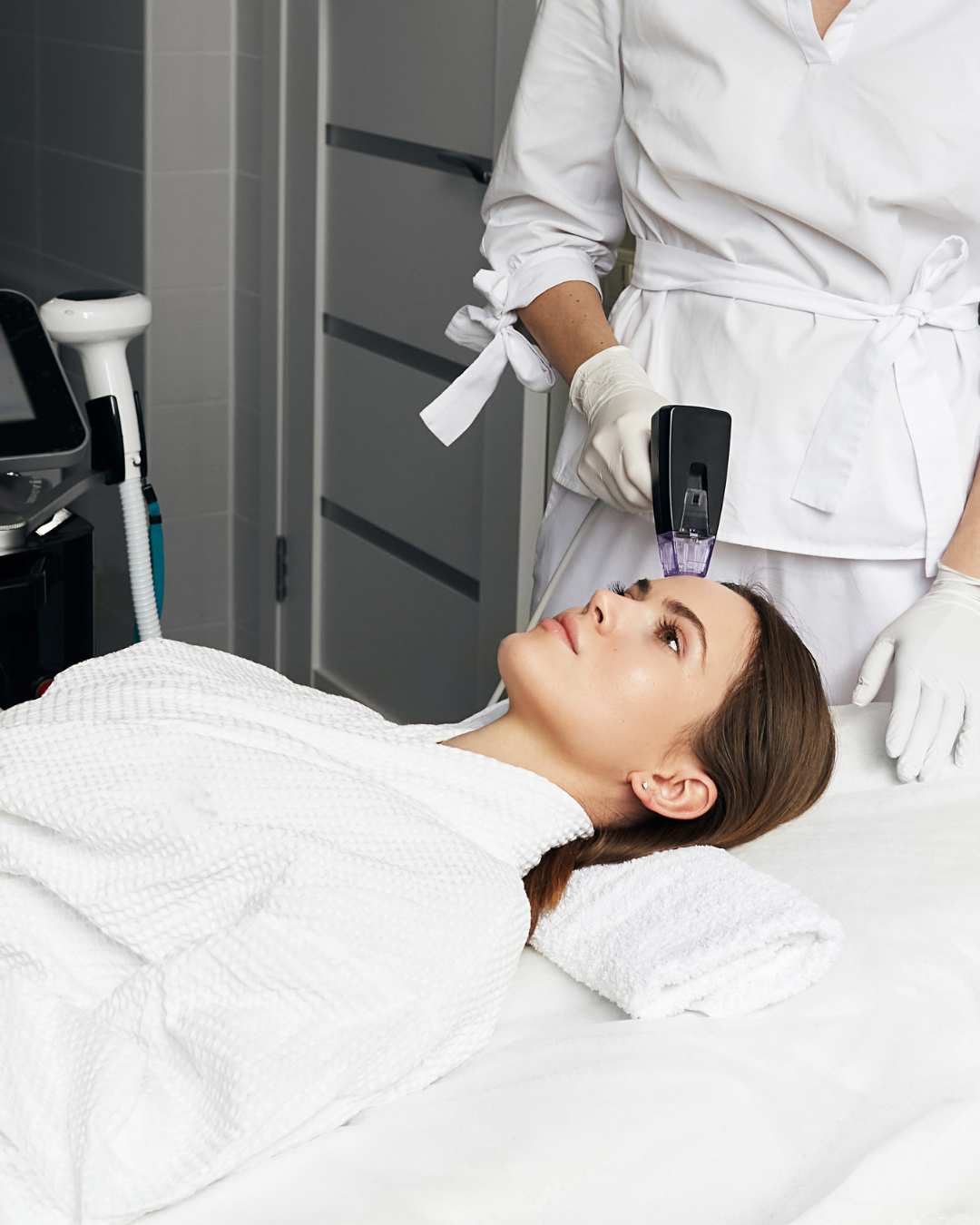
How to Get Your First Esthetician Job
A Real-World Guide From an Esthetics Educator and Med Spa Owner
Getting your first esthetician job can feel frustrating.
You graduate.
You get licensed.
You start applying.
And suddenly every job posting seems to want experience.
It creates an obvious problem:
How are you supposed to get experience if nobody will hire you without experience?
The good news is that employers understand this problem too.
When I interview a newly licensed esthetician, I am not expecting her to have the experience of someone who has been treating clients for five years.
I'm evaluating something different.
I'm asking:
Can I trust this person with a client?
Can I train her?
Will she represent my business professionally?
Does she understand the fundamentals?
Does she recognize what she doesn't know yet?
Does she have the attitude and work ethic required to become excellent?
I'm Erica Roybal, an esthetics educator, entrepreneur, and founder of Denver Dream Medspa and Colorado Aesthetics Academy.
I've taught esthetics students, interviewed applicants, hired providers, trained employees, and watched new estheticians develop into confident professionals.
This is the advice I would give anyone trying to land their first esthetician job.
First: Understand What Employers Are Actually Looking For
New estheticians often assume the person interviewing them is primarily evaluating how many advanced treatments they know.
Usually, I'm looking at something much broader.
Technical ability matters.
But especially for an entry-level candidate, I can teach technique.
What is much harder to teach is:
Professionalism
Reliability
Coachability
Judgment
Work ethic
Communication
Accountability
Attention to detail
Genuine interest in clients
You don't need to convince an employer that you already know everything.
You need to convince them that you're someone worth investing in.
Your First Esthetician Job Doesn't Need to Be Your Dream Job
This is one of the biggest mistakes I see new professionals make.
Your first job does not need to be the place you work for the next ten years.
It should help you become a stronger esthetician.
Early in your career, I would prioritize environments that give you:
Consistent hands-on experience
Strong training
Experienced people to learn from
Exposure to different clients
Clear systems
Feedback
Opportunities to grow
Sometimes a job that looks less exciting on Instagram is actually a much better place to develop professionally.
Before accepting a position, don't ask only:
"How much will I make?"
Ask:
"Who will I become after working here for a year?"
That question can completely change how you evaluate opportunities.
Step 1: Create a Professional Esthetician Résumé
Your résumé should be clean, simple, and relevant.
You do not need to fill the page with unrelated jobs just to make it look impressive.
If you're a new graduate, your résumé can include:
Education
List your esthetics school, program, completion date, and license information.
Relevant Training
Include training that is legitimate and relevant to the position.
Do not list every two-hour webinar you've ever watched.
Hands-On Experience
School clinic experience matters.
If you worked with real clients under supervision, say so.
Examples:
Performed customized facials
Completed client consultations
Practiced waxing services
Recommended home-care products
Maintained treatment-room sanitation
Documented client services
Customer Service Experience
If you've worked in hospitality, retail, restaurants, sales, healthcare, reception, or another service profession, don't underestimate that experience.
Strong customer-service skills transfer extremely well into esthetics.
Professional Skills
Examples might include:
Client consultation
Skin analysis
Retail recommendations
Scheduling
Treatment-room preparation
Sanitation protocols
Rebooking
Customer service
Don't Lie on Your Résumé
This should be obvious, but it happens.
Do not list yourself as proficient in a service because you performed it once in school.
Do not claim years of experience you don't have.
Do not list technology you've never actually used.
Employers can usually discover the truth quickly during an interview or practical examination.
I'd rather hear:
"I've had introductory training in this and I'm excited to get more experience."
than:
"I'm advanced in this treatment."
when you aren't.
Honesty creates trust.
Step 2: Build a Portfolio
If you're entering a visual industry, show your work.
A new esthetician portfolio might include:
Before-and-after skin photographs
Facials
Brow work
Lash services
Waxing results
Makeup
Skin improvements over multiple sessions
Other services you are properly trained to perform
Keep the photography professional.
Use:
Consistent lighting
Clean backgrounds
Similar angles
Similar distance
Sharp focus
Minimal editing
And never alter treatment results.
If I'm reviewing a candidate's portfolio, I want to evaluate the actual work.
Your Portfolio Does Not Need to Be Huge
Ten strong examples are better than fifty mediocre ones.
Choose work that demonstrates:
Clean technique
Attention to detail
Consistency
Range
Professional presentation
If you're still in school, start documenting your work now.
Don't wait until the week you're applying for jobs.
Step 3: Clean Up Your Professional Online Presence
Employers may search your name.
Assume they will.
That does not mean your social media needs to look like a corporate account.
You're allowed to be a real person.
But if your public profile is full of behavior you wouldn't want a future employer or client to see, think about what kind of professional reputation you're creating.
Ideally, someone searching your name should find evidence that you're serious about your career.
That might include:
Your esthetics portfolio
Educational posts
Professional photography
Certifications or education
Treatment content
Thoughtful skincare information
You don't need thousands of followers.
You need credibility.
Step 4: Apply to Jobs Strategically
Don't just send the same résumé to 100 businesses and hope something happens.
Research the company first.
Look at:
Their services
Their clientele
Their team
Their website
Their reviews
Their social media
Their brand
Their philosophy
Then ask:
Do I actually want to work here?
If the answer is yes, tailor your application.
A short message like:
I've been following your clinic and really appreciate your focus on corrective skincare and client education. I'm a newly licensed esthetician looking for an environment where I can continue developing my skills and contribute to a strong client experience.
is much stronger than:
Are you hiring?
Show that you've paid attention.
Should You Apply If the Job Wants Experience?
Often, yes.
If a posting asks for one year of experience and you meet most of the other qualifications, I would still consider applying.
Job descriptions often describe the ideal candidate.
They do not always describe the only candidate an employer would consider.
What you should not do is pretend you have the experience.
Apply honestly.
Your professionalism, portfolio, attitude, and interview may outweigh the missing year.
Step 5: Prepare for the Interview
Do not walk into an esthetician interview without researching the business.
You should know:
What services they offer
What brands they use
Who their typical client is
What their business appears to specialize in
What kind of environment they create
You should also be prepared to answer questions like:
Why did you become an esthetician?
Have a real answer.
What services do you feel most confident performing?
Be honest.
What services do you want more training in?
Again, honesty matters.
How would you handle an unhappy client?
Think through your answer beforehand.
How do you recommend retail products?
Employers want to understand whether you can communicate value without pressure.
How would you respond if you didn't know whether a client was a candidate for a service?
The strongest answer usually involves stopping, verifying, and asking someone qualified rather than guessing.
Step 6: Show Up Like You Already Belong in the Industry
First impressions matter.
Arrive early.
Not thirty minutes early.
Five to ten minutes is enough.
Dress professionally and in a way that fits the business.
Bring:
Résumé copies
Portfolio
License information if requested
A notebook
Questions
Put your phone away.
Be engaged.
And make eye contact.
Small details matter because they show how you may behave around clients.
What I Look for During an Esthetician Interview
Here are some of the things I personally notice.
Are You Professional?
This includes everything from your communication before the interview to how you enter the room.
Did you respond clearly?
Did you arrive when you said you would?
Did you prepare?
Are You Coachable?
This is huge.
If I give you feedback, do you:
Listen?
Ask questions?
Try to understand?
Or immediately defend yourself?
A new esthetician who is coachable can improve quickly.
Someone who believes every correction is criticism is much more difficult to develop.
Can You Communicate With Clients?
Technical skill without communication creates problems.
Can you explain something simply?
Can you listen?
Can you make someone feel comfortable?
Do You Understand Sanitation?
Sanitation should be automatic.
If I see unsafe behavior during a practical, it matters tremendously.
Are You Honest About What You Know?
Confidence is good.
False confidence is dangerous.
Are You Reliable?
No employer wants to build a clientele around a provider who frequently calls out, arrives late, or changes availability.
Do You Take Responsibility?
If something goes wrong, do you immediately blame someone else?
Or can you say:
"I should have handled that differently."
Accountability is one of the strongest professional qualities you can develop.
Step 7: Prepare for a Practical Interview
Some esthetics employers will ask you to perform a practical treatment before hiring you.
Do not panic.
They understand that you're interviewing.
They're usually evaluating your overall process.
They may look at:
Consultation
Sanitation
Setup
Draping
Client comfort
Product selection
Technique
Time management
Communication
Cleanup
Aftercare
One of the biggest mistakes candidates make is trying so hard to impress the evaluator with advanced knowledge that they forget the basics.
Fundamentals beat theatrics.
Do the simple things well.
Sanitation Can Make or Break a Practical
I cannot overstate this.
A technically beautiful service can be overshadowed by unsafe sanitation practices.
If you:
Drop something on the floor
Touch an unclean surface
Contaminate a product
Cross-contaminate tools
Touch your phone during a service
Reuse something that should be discarded
you need to recognize it immediately and correct it.
The mistake itself may sometimes be recoverable.
Failing to recognize the contamination is much more concerning.
Safe habits have to become automatic.
Step 8: Don't Overpromise During the Consultation
Another major hiring concern is when a provider promises the client a treatment plan and then delivers something completely different without clearly communicating why.
Clients need to understand:
What you're recommending
Why
What you're doing that day
What results are realistic
What may require additional appointments
If you tell someone you'll address several concerns and then use their entire treatment budget on one area without discussing that change, the client may feel misled.
Even when your clinical reasoning is good, communication matters.
This principle applies throughout your career:
Never create an expectation you cannot reasonably deliver.
Step 9: Learn to Say "I Don't Know"
This is one of my favorite qualities in a new provider.
You are not supposed to know everything.
Pretending you do can create safety problems.
If you're unsure, say:
"I want to verify that before I give you an answer."
or:
"I haven't encountered that yet, so I'd want guidance from someone more experienced."
That tells me you have judgment.
The goal isn't to never need help.
The goal is to recognize when you need help.
Step 10: Ask Good Questions at the End of the Interview
When the employer says:
"Do you have any questions for me?"
you should have some.
Good questions include:
What does training look like for a new esthetician?
What does success in this position look like during the first six months?
How are new providers typically introduced to clients?
What metrics do you use to evaluate providers?
How does compensation work?
What opportunities exist for continued education?
What does a typical schedule look like?
How long have members of the team been here?
What do your most successful estheticians tend to do differently?
These questions help you evaluate the employer too.
Remember:
An interview is not only about convincing them to hire you.
You're deciding whether you want to work there.
Red Flags to Watch for in an Esthetician Employer
New graduates can sometimes be so excited about getting hired that they ignore warning signs.
Pay attention if:
Compensation is intentionally confusing
You are expected to perform services outside your scope
Training is nonexistent
Sanitation standards seem poor
Employees turn over constantly
The employer won't explain expectations
You're pressured to sell inappropriate treatments
You're expected to work without proper licensure
You're asked to misrepresent your qualifications
You're classified as an independent contractor while being treated exactly like an employee without a legitimate basis
You are building a professional career.
Choose environments that protect that career.
Step 11: Follow Up After the Interview
A short professional follow-up can help.
You do not need to send a novel.
Something like:
Thank you for taking the time to meet with me today. I enjoyed learning more about the position and your approach to client care. I'm very interested in the opportunity and appreciate your consideration.
That's enough.
Professional.
Interested.
Not desperate.
What If You Don't Get the Job?
You're going to hear no.
Probably more than once.
Don't interpret every rejection as proof that you're not good enough.
Sometimes someone else had more experience.
Sometimes the business wanted a different schedule.
Sometimes another candidate had a stronger specialty.
Sometimes it simply wasn't a fit.
If appropriate, ask:
"Is there any feedback you would be willing to share that could help me improve for future interviews?"
Not every employer will respond.
But some will.
Use the information.
If You Keep Getting Rejected, Evaluate the Pattern
One rejection means very little.
Ten can reveal something.
Review:
Your résumé
Portfolio
Interviewing
Professional appearance
Communication
Availability
Practical skills
Sanitation
Confidence
Salary expectations
Job selection
Ask instructors or experienced professionals to review your materials.
You may need to improve one thing—not reinvent your entire career.
Step 12: Take Your First Job Seriously
Once someone hires you, the interview isn't over.
Your first several months establish your reputation.
Do things that make your employer glad they hired you.
Show up.
Be prepared.
Keep treatment rooms clean.
Ask questions.
Take notes.
Accept feedback.
Help the team.
Learn the systems.
Don't disappear the second your last client leaves if there is work that needs to be completed.
And most importantly:
Treat every client like they matter.
Even when you're new.
Especially when you're new.
Your Employer Is Watching More Than Your Treatment Results
Employers often notice things providers assume nobody sees.
I notice:
Whether clients rebook with you
Whether they request you again
Whether you run behind constantly
Whether you help coworkers
Whether you keep your room organized
Whether you're respectful to reception staff
Whether you contribute to the culture
Whether you accept responsibility
Whether you generate complaints
Whether clients trust you
Whether you learn
Professional success isn't built only inside the treatment room.
Step 13: Learn How to Rebook
One of the fastest ways to become valuable is to learn how to retain clients.
A good esthetician should be able to explain:
What should we do next?
and:
When should we do it?
Instead of saying:
Come back whenever you'd like.
try:
Based on what we're working on, I'd like to see you again in four weeks so we can continue building on today's treatment.
That's not pressure.
That's a treatment plan.
Your clients should know what comes next.
Step 15: Become the Person Clients Ask for by Name
This should become one of your long-term career goals.
At first, clients may book because you're available.
Eventually, you want them booking because they want you.
How does that happen?
Not through one viral post.
It happens because you consistently:
Listen
Educate
Deliver quality work
Follow up
Remember clients
Recommend honestly
Stay on time
Keep learning
Make people feel comfortable
Produce reliable results
Reputation compounds.
Step 16: Don't Leave Too Quickly
There are absolutely jobs you should leave.
But some new estheticians change employers every few months because they expect immediate advancement.
Give yourself enough time to learn.
If the environment is safe, ethical, professional, and providing development, there may be enormous value in staying long enough to become genuinely good.
Constantly starting over can slow down your growth.
But Don't Stay Somewhere That Stops You From Growing
The opposite is also true.
You may eventually realize:
There is no advancement
You've stopped learning
Compensation no longer matches your value
The culture is unhealthy
The business operates unethically
Your goals have changed
Then it may be time to move.
The goal isn't loyalty at all costs.
The goal is intentional career development.
How Long Should You Stay at Your First Esthetician Job?
There isn't a universal number.
I'd look more at what you're gaining.
Ask yourself:
Am I still learning?
Is my clientele growing?
Is my skill improving?
Is my compensation progressing?
Am I receiving opportunities?
Do I respect how this business operates?
Is this job taking me toward the career I want?
If the answer is consistently no, evaluate your next step.
How Much Should a New Esthetician Expect to Make?
There is no single answer.
Compensation varies by:
State
City
Type of business
Experience
Client volume
Hourly rate
Commission
Tips
Retail sales
Bonuses
Schedule
Be careful comparing yourself with people online.
Someone saying:
"I made $10,000 this month as an esthetician!"
may be talking about business revenue rather than personal take-home income.
Those are very different numbers.
Early in your career, I would think about both:
What am I earning?
and:
What am I learning?
The second question can influence the first one dramatically over time.
Can You Get a Med Spa Job Right Out of Esthetics School?
Sometimes.
It depends on the business, your training, your state, the role, and the services involved.
Med spas may be more competitive because many new graduates want advanced-aesthetics experience.
If that is your goal, strengthen your candidacy by developing:
Excellent consultations
Skin knowledge
Professionalism
Strong sanitation habits
Portfolio quality
Customer-service skills
Retail skills
Understanding of treatment planning
Willingness to learn
And understand this clearly:
Working at a med spa does not automatically mean you can legally perform every service offered there.
Your scope is still governed by the laws and regulations where you practice.
Do You Need Advanced Certifications Before Applying?
Usually, I would not postpone applying for jobs simply because you think you need ten more certificates.
Employers may have preferred technologies, protocols, and training.
Build a strong foundational résumé first.
Then pursue advanced education strategically based on:
Your legal scope
Career goals
Employer needs
Market demand
Don't go into debt collecting certifications because you're afraid you're not "advanced enough."
What If You Have No Clientele?
That's normal.
You're applying for your first job.
Most reasonable employers do not expect a brand-new graduate to bring a full book of clients.
But they will want to know whether you're capable of helping build one.
Show initiative.
Understand:
Rebooking
Reviews
Referrals
Social media
Professional networking
Client experience
An employer will feel much more confident hiring someone who understands that clientele requires effort.
What If You're Shy?
You do not have to become the loudest person in the room to succeed in esthetics.
Some incredible estheticians are naturally quieter.
But you must learn professional communication.
That includes:
Greeting clients
Asking questions
Explaining treatments
Making recommendations
Discussing expectations
Rebooking
Addressing concerns
Communication is a skill.
You can practice it.
What If You're Not Confident Yet?
That's also normal.
Confidence usually follows competence.
Don't wait to magically feel ready.
Practice.
Prepare.
Get feedback.
Repeat treatments.
Learn.
Your goal should not be to eliminate nervousness before your first job.
Your goal should be to become safe and prepared enough to keep learning once you're there.
My Biggest Advice for a New Esthetician
If I could sit across from every newly licensed esthetician before her first interview, this is what I would say:
You do not need to prove that you know everything.
You need to demonstrate that you are capable of becoming excellent.
Be safe.
Be professional.
Be honest.
Be curious.
Be coachable.
Learn to communicate.
Treat sanitation like it matters—because it does.
Don't overpromise.
Don't pretend.
Listen when experienced people teach you.
And don't become so focused on finding the perfect first job that you overlook a good opportunity to grow.
Your first employer isn't hiring your finished career.
They're hiring your potential.
Give them reasons to believe in it.
— Erica Roybal
Step 14: Learn Retail Without Becoming Pushy
Retail is another area where new estheticians often feel uncomfortable.
Think of product recommendations as part of treatment education.
If the client spends 30 days using inappropriate products at home, the one hour you spent with them may only accomplish so much.
You don't have to recommend ten products.
Recommend what matters.
Explain why.
Let the client decide.
A provider who can ethically recommend home care is valuable to clients and employers.
First Esthetician Job Checklist
Before applying, make sure you have:
Active license or appropriate status for your jurisdiction
Professional résumé
Clean portfolio
Professional email address
Appropriate voicemail greeting
Professional online presence
References if available
Interview outfit
Knowledge of the business
Questions prepared
Understanding of your availability
Realistic expectations
Willingness to learn
Frequently Asked Questions About Getting Your First Esthetician Job
How do I get an esthetician job with no experience?
Use your school clinic experience, build a strong portfolio, emphasize customer-service skills, apply to entry-level positions, demonstrate professionalism and coachability, and look for employers willing to train strong candidates.
What should I put on my esthetician résumé with no experience?
Include your education, license, school clinic experience, relevant services, certifications, customer-service background, professional skills, and any experience involving client communication, sales, hospitality, or skincare.
Do estheticians need a portfolio?
Not every employer requires one, but a strong portfolio can significantly improve your application because it provides visual evidence of your work and professionalism.
What should I wear to an esthetician interview?
Dress professionally and in a way that reflects the environment where you're interviewing. Clean, polished, understated presentation is generally safer than trying to look overly trendy.
Will an esthetician interview include a practical?
Some employers require one. Be prepared to demonstrate consultation, sanitation, treatment technique, client communication, safety, and aftercare.
What are employers looking for in a new esthetician?
Employers often look for professionalism, reliability, communication, sanitation, foundational technical ability, coachability, judgment, customer service, and willingness to learn.
Should I apply to med spas right after esthetics school?
You can, but competition may be stronger and scope-of-practice rules matter. Apply honestly, understand the role, and focus on your foundational skills and professionalism rather than trying to appear more advanced than you are.
Should I accept the first esthetician job I'm offered?
Not automatically. Evaluate the training, culture, compensation, client volume, expectations, legal compliance, growth opportunities, and whether the environment will help you develop.
How long does it take to build an esthetician clientele?
There is no fixed timeline. Location, schedule, employer traffic, retention, referrals, marketing, service quality, and personal reputation all influence how quickly your book grows.
What if I fail an esthetician practical interview?
Use the experience as feedback. Identify whether the issue was sanitation, consultation, technical skill, communication, confidence, time management, or another area and improve before your next interview.
What Should You Read Next?
If You Haven't Started School Yet
Read my complete guide to becoming an esthetician, including education, licensing, careers, income, specialization, and choosing the right school.
[HOW TO BECOME AN ESTHETICIAN →]
If You Want to Build Your Clientele
Your next skill is learning how to turn first-time appointments into long-term clients.
[HOW TO BUILD A CLIENTELE AS AN ESTHETICIAN →]
If You Want to Increase Your Income
Learn the skills, specialization, business knowledge, positioning, and personal branding that influence earning potential.
[HOW TO BECOME A 6-FIGURE ESTHETICIAN →]
If You're Considering Esthetics Education in Colorado
I founded Elite Aesthetics Academy to help students build both technical foundations and professional readiness for careers in the modern esthetics industry.
About Erica Roybal
Erica Roybal is an esthetics educator, entrepreneur, permanent makeup artist, author, and founder of Denver Dream Medspa and Elite Aesthetics Academy. Her experience spans professional esthetics, permanent makeup, cosmetic aesthetics, education, hiring and training providers, med spa operations, marketing, and business ownership. Through EricaRoybal.com, she shares experience-based career guidance for aspiring and established estheticians who want to make informed decisions about education, employment, earning potential, specialization, and entrepreneurship.