
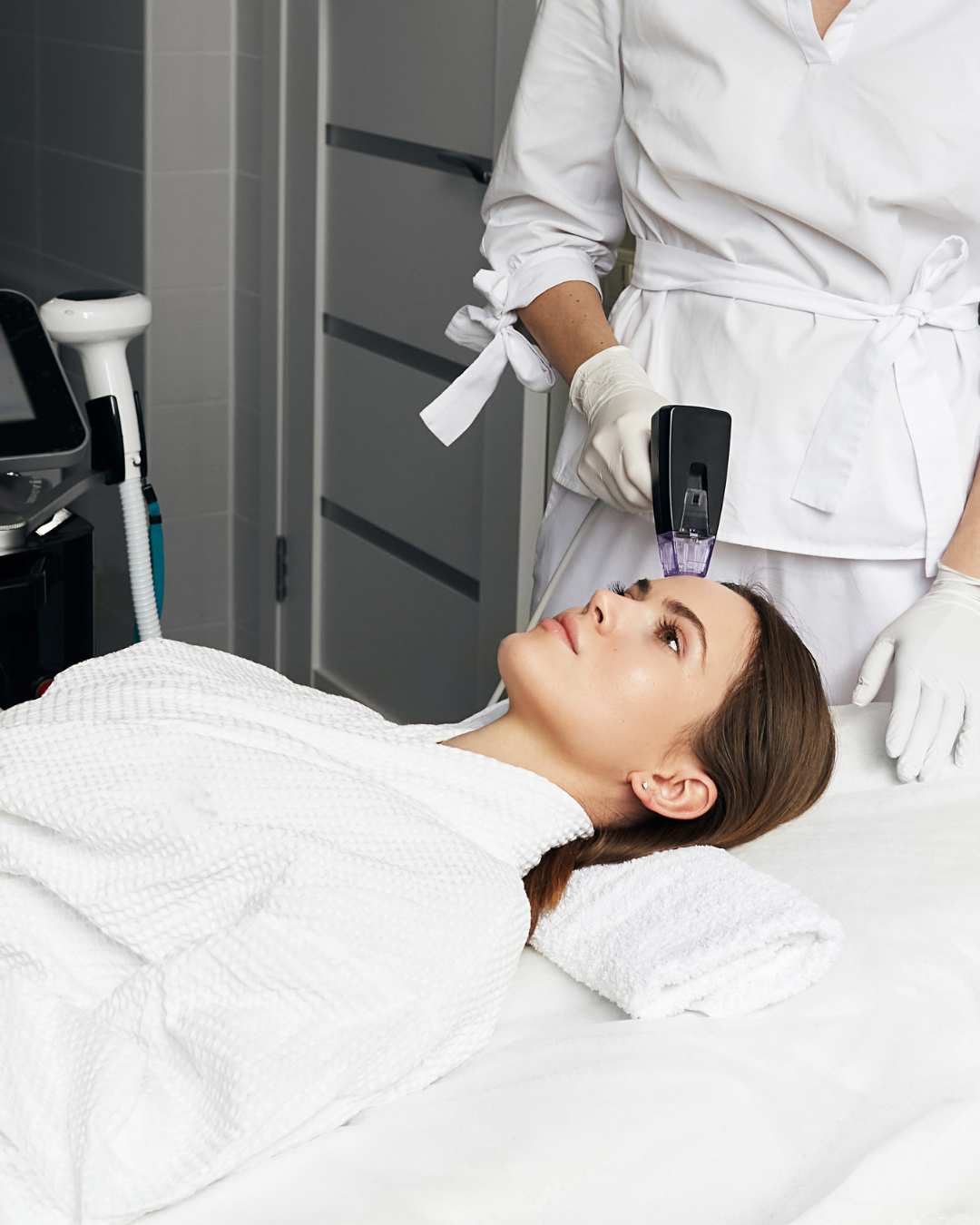
How to Build a Clientele as a New Esthetician
A Real-World Guide to Getting Clients, Rebooking Them, and Building a Career That Grows
How to Build a Clientele as a New Esthetician
A Real-World Guide to Getting Clients, Rebooking Them, and Building a Career That Grows
One of the hardest parts of becoming an esthetician is realizing that getting licensed does not automatically give you clients.
You can graduate from esthetics school.
You can pass your licensing exams.
You can learn treatments.
You can get hired.
And still look at your schedule and wonder:
Where is everyone?
This is one of the most important realities new estheticians need to understand.
Being good at esthetics and being good at building a clientele are two separate skills.
You need both.
I'm Erica Roybal, an esthetics educator, entrepreneur, and founder of Denver Dream Medspa and Colorado Aesthetics Academy.
I've built clientele myself, hired and managed providers, taught students entering this industry, watched new estheticians struggle with empty schedules, and watched others become the providers clients specifically request.
There are patterns.
And if I were starting my esthetics career over again today, client retention would be one of the very first things I would learn.
This guide will walk you through how I would approach building an esthetician clientele from zero.
First: Stop Thinking You Need Hundreds of Clients
When you're new, a full book can feel impossibly far away.
Don't start there.
Start with:
One client who wants to come back.
Then another.
Then another.
If you can consistently turn first-time appointments into returning clients, your clientele begins to compound.
Imagine you see 10 new clients this month.
If none of them return, next month you need to find another 10 strangers.
Then another 10.
And another 10.
That is exhausting.
But if six of those original clients return and you also see 10 new people the next month, you're beginning to build something.
Your real goal is not:
"How do I get more appointments?"
It is:
"How do I turn appointments into relationships?"
That mindset changes everything.
What Does It Mean to Build an Esthetician Clientele?
A clientele is not simply a list of people you've treated.
A strong clientele is a group of clients who:
Return consistently
Trust your recommendations
Request you specifically
Refer friends and family
Purchase appropriate home care
Follow treatment plans
Leave reviews
Book future appointments
Value your expertise
The difference is important.
A busy week does not necessarily mean you have a clientele.
A clientele creates predictable demand for you.
That is one of the most valuable things an esthetician can build.
Step 1: Become Excellent at the Consultation
If I were coaching a new esthetician, this is one of the first skills I would work on.
Why?
Because the consultation influences:
Trust
Treatment selection
Expectations
Retail
Rebooking
Client satisfaction
Retention
Yet many new providers rush through it.
Don't.
A consultation is where the client decides whether you understand her.
Ask Better Questions
Instead of immediately telling the client what you see, ask questions.
Try:
"What bothers you most about your skin?"
"What would you most like to improve?"
"What are you currently using at home?"
"Have you had professional treatments before?"
"What did you like or dislike about them?"
"Are there any upcoming events you're preparing for?"
"How much downtime are you comfortable with?"
"What does your ideal result look like?"
Then listen.
Do not ask the question simply so you can wait for your turn to talk.
Your recommendations should connect directly to what the client told you.
Clients Want to Feel Heard Before They Want to Be Educated
New estheticians sometimes become so excited to demonstrate what they've learned that the consultation becomes a lecture.
You're trying to prove:
I know skin.
But the client is wondering:
Does she understand my skin?
Those are different things.
A good consultation should feel collaborative.
You are not performing at the client.
You are solving something with them.
Step 2: Set Realistic Expectations
One of the fastest ways to lose a client is to overpromise.
If someone has spent years developing pigmentation, acne scars, texture, or another concern, don't tell them one treatment will completely solve it if that is not realistic.
It may help you sell today's appointment.
But it can destroy long-term trust.
Instead, explain:
What today's treatment can accomplish
What it cannot accomplish
What improvement may take time
What home care matters
What the next step may be
Underpromising and delivering a good experience builds far more loyalty than promising perfection.
Clients appreciate honesty.
Step 3: Create an Experience People Want to Repeat
Results matter tremendously.
But clients do not evaluate only the result.
They experience the entire appointment.
Think about:
How they are greeted
Whether you're on time
Whether the room is clean
Whether they feel rushed
Whether you remember their concerns
Whether you explain what you're doing
Whether they feel comfortable asking questions
Whether you're focused on them
How you end the appointment
There are many technically competent estheticians.
The experience is often what makes someone remember you.
Small Details Build Client Loyalty
You don't need an enormous budget.
You need consistency.
Remember:
Their name
Their main concern
The products they purchased
What you treated last time
Whether they had an upcoming wedding
Whether their skin reacted to something
What they liked or disliked about a previous service
That information should be documented professionally when appropriate.
Then use it.
Imagine walking into your second appointment and your esthetician says:
"Last time you told me the dryness around your mouth was bothering you. How has that been since we changed your routine?"
That feels completely different from:
"So what are we doing today?"
One sounds like a provider.
The other sounds like your esthetician.
That's what you're trying to become.
Step 4: Rebook Before the Client Leaves
This may be the simplest strategy on this entire page.
And yet many estheticians don't do it.
They finish the service and say:
"Come back whenever you need me!"
That forces the client to decide:
When?
Why?
What should I book?
How long should I wait?
Most people are busy.
So they leave.
Three months pass.
Then six.
Instead, give professional guidance.
Try:
"For what we're working on, I'd like to see you again in about four weeks. At that appointment, we'll reassess your skin and decide whether to repeat this treatment or move to the next step."
Now there is a plan.
Then ask:
"Would you like to reserve that today?"
That's not pushy.
It's good client care.
Rebooking Should Have a Reason
Don't randomly tell everyone to come back in four weeks.
Explain why.
Examples:
Acne-focused client
"We want to keep monitoring your congestion and adjust the treatment as your skin changes."
Corrective skincare
"This works best progressively, so your next appointment helps us continue building on today's result."
Maintenance client
"Once we get your skin where we want it, we can spread these appointments out."
The client should understand how today's treatment connects to the next one.
Step 5: Build Treatment Plans, Not One-Off Services
This is a major shift.
A new esthetician may think:
What facial should I sell this person today?
A stronger provider thinks:
What is the smartest path from where this client's skin is now to where she wants it to be?
That may include:
Today's service
Home-care changes
Follow-up treatment
A series
Maintenance
Referral to another provider
Clients are more likely to stay when they feel you're guiding them somewhere.
Step 6: Follow Up After Appropriate Treatments
A short follow-up can separate you from almost every other provider.
Depending on the service, you might message:
"Hi Sarah, it's Erica. I wanted to check on you after yesterday's treatment. How is your skin feeling today?"
That's it.
It doesn't need to become a sales conversation.
You're showing that you care about the outcome after the payment was processed.
This is particularly meaningful with:
First-time clients
Advanced treatments
Clients nervous about a procedure
Clients who had an unexpected response
Major treatment milestones
Follow-up builds trust.
Step 7: Ask for Reviews
If a client tells you:
"I loved this."
That is a natural moment to ask.
You can say:
"I'm so glad. If you feel comfortable leaving a review about your experience, it really helps people who are trying to choose a provider."
Don't pressure anyone.
Don't script fake reviews.
Don't tell clients exactly what to write.
You want real feedback.
Reviews can help new clients trust you before they've ever met you.
Step 8: Ask for Referrals Without Making It Awkward
A loyal client is often your best marketing source.
People trust recommendations from people they know.
You don't need to repeatedly ask:
"Do you have any friends you can send me?"
Instead, create experiences worth talking about.
When appropriate, simply let happy clients know:
"I'm building my clientele right now, so referrals really mean a lot to me."
That's enough.
You may also work somewhere with a formal referral program.
Use it.
Step 9: Take Excellent Before-and-After Photos
Your portfolio is one of your strongest marketing tools.
But only if the photographs are credible.
Use:
Consistent lighting
Consistent distance
Consistent angles
Similar facial expression when appropriate
Clean background
Clear focus
Avoid:
Beauty filters
Different lighting designed to exaggerate results
Smoothing skin
Changing saturation to manipulate redness or pigmentation
Editing out imperfections
Your before-and-after photos should document treatment results, not manufacture them.
Step 10: Build a Professional Social Media Presence
Social media can help.
But I want new estheticians to understand:
Your goal is not necessarily to become an influencer.
Your goal is to help potential clients trust you.
A person researching you should be able to tell:
What you do
Where you're located
Who you serve
What you specialize in
What your work looks like
How to book
Keep it simple.
What Should a New Esthetician Post?
Start with questions clients actually ask.
For example:
Educational Content
How often should you get a facial?
Why does skin get dry in winter?
What causes clogged pores?
What should you avoid before a facial?
What is the difference between two treatments?
How long does a treatment take?
What should you expect afterward?
Portfolio Content
Show real work.
Behind-the-Scenes Content
Show how you prepare your room or explain your approach.
Personal Professional Content
Let clients know who you are.
Client FAQs
Every question someone asks you in person can become content.
You do not have to constantly invent ideas.
Your clients are already telling you what they want to know.
Step 11: Make Your Content Local
If you're trying to build a clientele in Denver, a video seen by 500 Denver residents may be more valuable than a video seen by 100,000 people across the world.
Talk about your market.
For example:
How Colorado's dry climate affects your skin
My favorite skin treatments for Denver winters
How altitude can affect skin hydration
What Denver clients should know before getting a peel
Your content becomes relevant to someone who can actually book with you.
Step 12: Make It Easy to Book You
This sounds obvious.
Yet I regularly see professional profiles where I cannot tell:
Where the provider works
What city she's in
What services she offers
How to book
Don't make potential clients investigate you.
Your bio should clearly communicate:
WHO YOU ARE
WHAT YOU DO
WHERE YOU ARE
HOW TO BOOK
For example:
Licensed Esthetician | Denver, CO
Corrective Skincare + Acne
Currently accepting new clients
Book below ↓
Simple.
Step 13: Don't Discount Yourself Into a Clientele
Discounting may help introduce people to you.
But there is a difference between a strategic introductory offer and training your entire clientele to wait for a sale.
If someone books only because your service is 50% off, ask:
Will this person return when it's full price?
Sometimes yes.
Sometimes no.
Use promotions intentionally.
Don't build your entire identity around being the cheapest option.
Step 14: Stop Trying to Compete on Price
There will almost always be someone cheaper.
You don't necessarily win by charging less.
You can compete on:
Expertise
Experience
Results
Service
Convenience
Communication
Specialization
Trust
Environment
The goal is for someone to choose you because they believe you're the right provider, not because you were the lowest-priced appointment available.
Step 15: Learn Ethical Product Recommendations
Home care can significantly influence client results.
If someone receives a professional treatment once per month but uses inappropriate products every day at home, that matters.
Recommend products because they are appropriate—not simply because you earn commission.
Explain:
What it does
Why you're recommending it
How to use it
Where it fits into their routine
You do not need to overwhelm someone with eight new products.
Sometimes one intelligent recommendation builds far more trust.
Step 16: Learn How to Talk About Money
New estheticians sometimes become uncomfortable the moment price enters the conversation.
You need to be able to discuss:
Treatment cost
Packages
Memberships
Product cost
Maintenance
Future appointments
without apologizing.
You are providing a professional service.
If a treatment costs $250, you don't need to whisper it.
State it clearly.
Then explain the options.
Clients can decide what works for their budget.
Step 17: Become Known for Something
Early in your career, broad experience is valuable.
But eventually, differentiation helps.
Ask:
What do I want people to recommend me for?
Maybe:
"Go to her for acne."
"She does incredible brows."
"She's amazing with mature skin."
"She really understands pigmentation."
"She's the laser girl."
Being known for something creates word-of-mouth marketing.
That doesn't mean you can perform only one service.
It means people have a clear reason to remember you.
Step 18: Educate More Than You Promote
Look at the difference:
Promotional
"I have three facial appointments left this week. BOOK NOW!"
versus:
Educational
"If your face feels tight immediately after cleansing, your cleanser may be too aggressive. Here are three things I look for when evaluating a client's home routine."
Which one makes you sound more knowledgeable?
You can still post availability.
But if every piece of content says:
Book now.
Book now.
Book now.
you aren't giving people a reason to trust you.
Teach.
Then invite.
Step 19: Network With Other Professionals
Client referrals do not have to come only from clients.
Build relationships with:
Hair stylists
Makeup artists
Nail professionals
Brow artists
Lash artists
Massage therapists
Fitness professionals
Bridal professionals
Photographers
Other estheticians
Appropriate healthcare professionals
Do not approach every relationship asking:
"What can you send me?"
Build real professional connections.
Referral networks grow over time.
Step 20: Be a Great Coworker
This matters more than most new estheticians realize.
If you work in a spa or med spa, the front desk, other providers, managers, and owners can influence your schedule.
When a client calls and says:
"I don't know who to book with. Who do you recommend?"
Who do you think the team recommends?
Usually the provider they trust.
Be:
Reliable
Helpful
Professional
Kind
Easy to communicate with
Prepared
Never underestimate internal reputation.
Step 21: Build Relationships With the Front Desk
This deserves its own section.
Reception and booking teams often have enormous influence over client flow.
Treat them with respect.
Don't act like they're beneath you.
Help them understand:
Your specialty
Who is a good fit for you
What services you're confident in
What availability you have
A strong front desk can become one of your biggest allies.
Step 22: Handle Complaints Professionally
You will eventually have an unhappy client.
Every provider does.
Do not panic.
Don't immediately become defensive.
Listen.
Ask questions.
Document what happened.
Follow business policy.
Involve management when appropriate.
Sometimes the client is right.
Sometimes expectations were unrealistic.
Sometimes communication failed.
Sometimes something happened that nobody could reasonably predict.
Regardless:
Your response can protect or destroy the relationship.
Clients don't always expect perfection.
They do expect professionalism.
Step 23: Don't Gossip About Clients
Ever.
Your treatment room must feel safe.
Clients may tell you personal things.
Do not turn those conversations into entertainment for coworkers or social media.
And never post a story that makes it easy for people to identify a client you're complaining about.
Professional trust is difficult to build and easy to lose.
Step 24: Respect Client Boundaries
Relationship-building matters.
But professional boundaries matter too.
Don't pressure clients into:
Treatments
Products
Personal relationships
Social media content
Photos
Reviews
Do not make someone feel guilty for saying no.
Long-term clientele is built on trust.
Step 25: Be Reliable
This sounds boring.
It is also powerful.
Show up.
Start on time.
Do what you said you would do.
Respond professionally.
Don't constantly reschedule clients.
Don't cancel because you received a better opportunity.
Reliability is part of your brand.
A client who cannot depend on your schedule will eventually find someone else.
Step 26: Know Your Numbers
If you're serious about building a clientele, track what is happening.
You don't need complicated software to begin.
Pay attention to:
New Clients
How many new people did you see?
Rebooking
How many scheduled another appointment?
Retention
How many actually returned?
Average Ticket
What is the average amount spent per client?
Retail
Are appropriate home-care recommendations being accepted?
Referrals
How many clients came from word of mouth?
Reviews
Are happy clients sharing their experiences?
Without numbers, you may feel busy without understanding whether your book is actually growing.
Step 27: Understand the Difference Between Rebooking and Retention
This is important.
A client can rebook today and cancel next month.
That is not retention.
Retention means the client actually returns.
Watch both.
If rebooking is high but retention is low, ask why.
Maybe:
Scheduling is inconvenient
Prices are unclear
Clients don't understand why the next visit matters
Results aren't meeting expectations
Follow-up is weak
Appointments feel impersonal
Your numbers can teach you where to improve.
Step 28: Stop Focusing Only on New Clients
This is one of the biggest marketing mistakes businesses make.
Everyone wants more leads.
But before spending money finding more strangers, ask:
What happened to everyone who already came in?
If 100 new clients see you and only 10 return, your first problem is not lead generation.
It's retention.
Fix the experience.
Then scale acquisition.
Step 29: Build Relationships Between Appointments
You don't need to constantly message clients personally.
But your professional presence can keep you top of mind.
That might include:
Useful emails
Educational social content
Seasonal skincare tips
Treatment reminders
New service education
Appropriate follow-ups
The goal isn't to spam people.
It's to remain relevant.
Step 30: Build Your Personal Brand
One of the most powerful career moves an esthetician can make is developing a professional identity that can grow with her.
Your personal brand is:
What people think when they hear your name.
Maybe you become known for:
Thoughtful consultations
Natural results
Corrective skincare
Acne
Education
Advanced technology
Excellent customer experience
Show that consistently.
You don't need a perfect logo.
You need a reputation.
What I Would Do If I Had Zero Esthetician Clients Today
If I moved to a new city tomorrow and had to rebuild completely from zero, here's what I would do.
1. Choose a Clear Specialty or Starting Focus
I would still offer multiple services, but I would give people something easy to remember.
For example:
Corrective skincare for acne-prone adults in Denver.
Specific beats vague.
2. Make My Online Profiles Extremely Clear
Name.
Location.
Specialty.
Work.
Booking link.
3. Build 20 Pieces of Educational Local Content
I would answer questions my ideal clients are already searching.
4. Take Every Appropriate Opportunity to Practice
Experience builds confidence.
5. Photograph Everything With Permission
I would start building evidence.
6. Overdeliver on the Consultation
I would want every client to feel understood.
7. Give Every Client a Next Step
Nobody leaves confused about what happens next.
8. Rebook Before Checkout
Whenever clinically and professionally appropriate.
9. Follow Up
Especially with first-time clients.
10. Ask Happy Clients for Reviews
Consistently.
11. Build Local Relationships
Hair salons.
Fitness studios.
Makeup artists.
Bridal professionals.
Other beauty providers.
12. Track Retention Every Month
Not just follower count.
13. Study Why Clients Don't Return
I would treat lost clients as information.
14. Keep Improving My Skill
Marketing cannot permanently compensate for mediocre work.
15. Give It Time
I would not expect a mature clientele after 90 days.
How Long Does It Take to Build an Esthetician Clientele?
There is no universal timeline.
It depends on:
Your location
Hours
Employer
Client traffic
Skill
Retention
Marketing
Pricing
Specialization
Referrals
Reviews
Availability
Some estheticians develop strong books quickly.
Others take a few years.
That's normal.
The question I would focus on isn't "How fast can I get full?"
It is:
"Is my clientele growing stronger every quarter?"
That's more sustainable.
How Many Clients Does an Esthetician Need?
This depends on:
Service prices
Appointment length
Schedule
Compensation
Retail
Rebooking frequency
Income goal
A provider performing $300 services does not need the same number of appointments as someone performing $75 services.
This is why you need to understand average ticket, not simply client count.
How Do Estheticians Get Their First 10 Clients?
Start close.
Your first clients may come from:
School clinic relationships where permitted
Friends
Family referrals
Coworkers
Existing employer traffic
Local social media
Google searches
Professional referrals
Community groups
Networking
Promotions
But your goal with those first 10 should be:
Make them your first 10 returning clients.
Not simply your first 10 transactions.
Should New Estheticians Offer Discounts?
They can be useful strategically.
Examples include:
Model pricing while developing a skill
Introductory offers
Referral incentives
New-provider promotions
Packages
But always know:
Why am I discounting?
Who am I trying to attract?
What happens after the discount?
If your entire clientele disappears when the promotion ends, you did not build a clientele.
You rented one.
How Do You Get Clients Without Social Media?
You absolutely can.
Focus on:
Referrals
Rebooking
Google Business presence if applicable
Reviews
Local networking
Business partnerships
Community events
Employer traffic
Email
Excellent client experience
Social media is one marketing tool.
It is not the entire business.
Do You Need Instagram to Be a Successful Esthetician?
No.
But having a professional online presence can make it easier for someone to evaluate you.
Think of Instagram less like:
"I need followers."
and more like:
"I need proof."
Proof that:
You exist
You're professional
You know your subject
You do good work
You're located nearby
You're accepting clients
Why Aren't My Esthetician Clients Rebooking?
If clients aren't returning, investigate.
Possible reasons include:
They didn't understand the plan.
Explain what's next.
They didn't see enough value.
Improve consultation, experience, education, or treatment selection.
The service didn't meet expectations.
Look at what was promised.
You didn't ask.
Sometimes it's that simple.
Scheduling is difficult.
Availability matters.
Pricing wasn't communicated clearly.
Nobody likes surprises.
They didn't connect with you.
Not every client-provider relationship will be a fit.
They simply weren't ready.
Not every lost client is a failure.
Look for patterns instead of obsessing over individual cases.
Why a Full Schedule Isn't the Ultimate Goal
I want to challenge something.
A completely full schedule may sound like success.
But if you're:
Exhausted
Constantly running late
Unable to fit loyal clients in
Providing rushed treatments
Working six days a week
Making less than you expected
then "fully booked" may not be the right metric.
Eventually, success may mean:
A strong clientele + appropriate pricing + healthy schedule + strong retention.
More is not always better.
Better is better.
How Building a Clientele Leads to Higher Income
A strong clientele affects almost everything.
You become:
Less dependent on walk-ins
Less dependent on constant promotions
More valuable to employers
Better positioned to negotiate compensation
More likely to receive referrals
Better positioned to specialize
More capable of becoming independent later if desired
This is one of the foundations of building a higher-income esthetics career.
If increasing your earning potential is your goal, read:
[HOW TO BECOME A 6-FIGURE ESTHETICIAN →]
Should You Leave Your Job Once You Have a Clientele?
Not automatically.
This is where many providers make a mistake.
They think:
Clients request me. Therefore I should immediately open my own business.
Maybe.
Maybe not.
Employment may be providing:
Treatment space
Equipment
Supplies
Reception
Marketing
Insurance
Client acquisition
Technology
Administration
Training
When you become independent, you may have to pay for all of those yourself.
Business ownership is a separate calculation.
Build your clientele first.
Then make the decision intelligently.
[READ: SHOULD YOU OPEN YOUR OWN ESTHETICS BUSINESS? →]
The Biggest Client-Building Mistakes I See New Estheticians Make
Waiting for Clients Instead of Building Relationships
You cannot passively hope your schedule fills.
Focusing Only on Instagram
Followers are not the same as appointments.
Constant Discounting
This can attract clients loyal to price rather than to you.
Not Rebooking
You're leaving retention to chance.
Poor Follow-Up
Clients disappear between appointments.
Talking Too Much During Consultations
Listen first.
Overpromising
Temporary sales can cost long-term trust.
Trying to Sell Everything
Recommend what makes sense.
Ignoring Photography
You need evidence of your work.
Constantly Changing Specialties
Give yourself time to become known for something.
Comparing Your Year One to Someone Else's Year Ten
Probably the fastest way to make yourself miserable.
A 90-Day Client-Building Plan for New Estheticians
If you're starting now, here's what I would focus on.
Month One: Build the Foundation
Your goals:
Define your ideal client
Clean up professional profiles
Improve consultation
Create a photography system
Develop a rebooking script
Ask for reviews
Begin documenting work
Track every appointment
Don't obsess over follower growth.
Build systems first.
Month Two: Increase Visibility
Your goals:
Publish useful educational content consistently
Build local professional relationships
Ask happy clients for referrals
Improve your portfolio
Review retention
Follow up with appropriate clients
Create content based on real FAQs
Now you're giving more people a reason to discover you.
Month Three: Improve Retention
Look at your data.
Ask:
How many new clients did I see?
How many rebooked?
How many actually returned?
Where did they find me?
Which services create repeat clients?
What objections am I hearing?
Who refers the most people?
Then improve based on actual behavior.
Don't guess when your clients can tell you.
Your Clientele-Building Checklist
Before worrying about advanced marketing, make sure you can say yes to these:
I know who I want to serve.
My online profiles clearly state what I do and where I work.
I have an easy booking process.
I perform thorough consultations.
I set realistic expectations.
I take consistent before-and-after photos.
I recommend next steps.
I ask clients to rebook.
I follow up when appropriate.
I ask happy clients for reviews.
I give excellent client experiences.
I track retention.
I understand my average ticket.
I create useful local content.
I am building professional relationships.
I am continuing to improve technically.
If you aren't doing these consistently, start here before spending thousands of dollars on advertising.
Frequently Asked Questions About Building an Esthetician Clientele
How do I build clientele as a new esthetician?
Focus first on retaining the clients you already see. Deliver strong consultations and treatments, provide clear next steps, rebook appropriately, follow up, collect genuine reviews, document your work, create useful local content, and develop referral relationships.
How do new estheticians get clients?
New clients can come from employer traffic, referrals, local social media, search engines, professional partnerships, friends and family referrals, community networking, reviews, and promotions.
How long does it take to build a full esthetician clientele?
There is no universal timeline. Your schedule, location, retention, marketing, employer, pricing, service mix, and professionalism all influence growth. Think in terms of steady quarterly improvement rather than expecting instant results.
How can I get more facial clients?
Educate potential clients about the skin concerns facials can address, create strong before-and-after content where appropriate, optimize your local online presence, ask for reviews, build referral relationships, and most importantly retain existing facial clients.
How do I get esthetician clients without Instagram?
Use Google visibility where applicable, client referrals, reviews, local partnerships, networking, rebooking, email marketing, employer-generated leads, community relationships, and excellent client experiences.
Should a new esthetician lower prices to get clients?
Strategic introductory pricing can help, but constant discounting can make long-term growth difficult. Use promotions intentionally and make sure the regular service provides enough value for the client to return at normal pricing.
How do I get clients to rebook?
Explain the treatment plan clearly. Tell clients what you recommend next, why you recommend it, and when it should happen. Then offer to reserve the appointment before they leave.
How can an esthetician get more referrals?
Give people an experience worth recommending, create consistent results, maintain good communication, and let happy clients know referrals are appreciated. Formal referral programs may also help when appropriate.
Should estheticians sell skincare products?
Appropriate home-care recommendations can be an important part of professional skin treatment. Recommend products based on the client's needs rather than purely on sales goals.
How important are reviews for estheticians?
Reviews can be very important, especially for clients evaluating an unfamiliar provider. Ask satisfied clients for honest reviews without scripting or pressuring them.
Do I need thousands of social media followers to build a clientele?
No. A smaller audience of people located near you and genuinely interested in your services may be far more valuable than a large audience that cannot realistically become clients.
What I Want Every New Esthetician to Understand
You do not build a career by collecting appointments.
You build it by collecting trust.
One client trusts you enough to return.
Then she trusts you enough to refer her sister.
Her sister tells a coworker.
The front desk notices clients request you.
Your reviews grow.
Your portfolio improves.
Your confidence improves.
You become more experienced.
Your treatments get better.
Your reputation gets stronger.
And eventually, something changes.
You're no longer wondering:
"How do I find clients?"
People are asking:
"How do I get an appointment with you?"
That transformation does not usually happen overnight.
It happens through hundreds of small things done consistently well.
Show up.
Listen.
Learn.
Take good care of people.
Ask them to come back.
Keep improving.
And give your career enough time to compound.
That's how you build a clientele.
— Erica Roybal
What Should You Learn Next?
Still Trying to Land Your First Position?
Read my employer-side guide to résumés, interviews, practicals, professionalism, and what I look for when hiring new estheticians.
[HOW TO GET YOUR FIRST ESTHETICIAN JOB →]
Want to Increase Your Income?
Once you have a strong foundation and growing clientele, learn how specialization, personal branding, advanced education, business awareness, and career strategy can increase earning potential.
[HOW TO BECOME A 6-FIGURE ESTHETICIAN →]
Considering Opening Your Own Business?
A clientele is important—but it isn't the only thing you need before becoming independent.
[SHOULD YOU OPEN YOUR OWN ESTHETICS BUSINESS? →]
Want to Become an Esthetician?
Start with my complete guide to choosing a school, getting licensed, getting experience, and building your career.
[HOW TO BECOME AN ESTHETICIAN →]
Looking for Esthetics Education in Colorado?
I founded Elite Aesthetics Academy to help students develop not only foundational esthetics skills, but the professionalism, hands-on experience, career awareness, and confidence needed to enter the industry.

About Erica Roybal
Erica Roybal is an esthetics educator, entrepreneur, permanent makeup artist, author, and founder of Denver Dream Medspa and Elite Aesthetics Academy. Her experience spans professional esthetics, permanent makeup, cosmetic aesthetics, education, hiring and training providers, med spa operations, marketing, and business ownership. Through EricaRoybal.com, she shares experience-based career guidance for aspiring and established estheticians who want to make informed decisions about education, employment, earning potential, specialization, and entrepreneurship.